South America is massive, wildly diverse, and surprisingly easy to navigate once you understand the transport “rules of the game.” If you’re planning your first big loop, the question that comes up fast is how to get around south america without overspending or losing days to logistics. The good news: you can mix comfortable long-distance buses, cheap regional flights, and some of the most scenic overland routes on Earth to build an itinerary that fits your time, budget, and comfort level.
This guide breaks down the main ways to travel between countries and within them, how to book tickets smartly, what to expect at stations and airports, and which routes are worth slowing down for. Use it whether you’re backpacking for months or stitching together a two-week highlight trip.
Quick Planning Checklist Before You Move
A little planning goes a long way here. Transport options change dramatically between the Southern Cone, the Andes, the Amazon basin, and the Caribbean coast. Before you buy anything, do these five quick checks.
- Map your trip into “clusters” (for example: Colombia + Ecuador, or Peru + Bolivia, or Chile + Argentina). Overland travel is easiest inside a cluster; flights help you jump between clusters.
- Decide your pace: overland travel is slower but cheaper and more immersive; flying is faster but can add airport time and luggage rules.
- Check season and altitude: rain can disrupt roads in the wet season; high passes can close in winter; altitude affects how you feel on night buses.
- Set a comfort baseline: in many countries you can choose between basic, semi-cama (reclining), and cama (nearly flat) seats on buses.
- Keep “buffer days” for border crossings, strikes, and weather—especially if you’re chasing Patagonia or Amazon experiences.

Long-Distance Buses: The Backbone of Budget Travel
For most travelers, buses are the default answer for cross-country travel. Networks are extensive, tickets are usually affordable, and modern companies can be surprisingly comfortable. In places like Peru, Bolivia, Ecuador, Colombia, Argentina, and Chile, long-distance buses connect major cities daily—and sometimes hourly.
Bus seat classes and what they really mean
Bus terminology varies, but the experience is fairly consistent:
- Economy / Regular: upright seats, minimal legroom—fine for short hops.
- Semi-cama: more legroom and a deeper recline; a sweet spot for 4–10 hour journeys.
- Cama: wide seats that recline close to flat; best for overnight routes when you want to arrive functional.
- Cama suite / ejecutivo: limited rows, privacy curtains on some lines, meals included—often cheaper than a midrange hotel for the same night.
How to book bus tickets without stress
You can buy tickets at terminals, but online booking has improved a lot. A simple strategy is to compare schedules online, then purchase with the operator directly when possible. For popular routes (Cusco–Puno, La Paz–Uyuni, Medellín–Cartagena), reserve a day or two ahead; for holiday periods, book earlier.
At the station, arrive 30–60 minutes before departure. Keep your passport handy, watch your bag during boarding, and label your luggage if it goes in the hold. Many terminals issue a small baggage tag—don’t lose it, because you’ll need it to claim your bag.
Night buses: comfort, safety, and sleep
Night buses save money and time, but only if you can actually rest. Bring layers (air-conditioning can be intense), a light blanket or large scarf, and earplugs. Choose a reputable company for long overnight trips, keep valuables on you, and consider a window seat if you like to lean and sleep.

Budget Flights: When Flying Makes More Sense
Distances can be deceptive. A bus ride that looks “doable” on a map can take 20–30 hours once you factor in mountains and road conditions. That’s when budget flights become your best tool—especially for skipping long backtracks or jumping between far-apart regions.
Where flying saves the most time
- Jumping between northern South America (Colombia/Ecuador) and the central Andes (Peru/Bolivia).
- Crossing from the Andes to the far south (Patagonia) or vice versa.
- Linking Brazil’s big cities when you don’t want multi-day bus rides.
- Reaching remote hubs for nature trips (for example: gateways near the Amazon or deep Patagonia).
Tips to keep flight costs low
- Be flexible with days: mid-week flights are often cheaper than weekends.
- Search in a private window and compare both one-way and round-trip pricing.
- Pack with budget rules in mind: low fares usually assume a small personal item; carry-on and checked bags can double the price.
- Use secondary airports when practical, but calculate transfer time and costs.
- Consider “open-jaw” itineraries (fly into one city, out of another) to reduce backtracking.
Scenic Routes Worth Taking Slowly
If you’re not in a rush, some overland routes are the highlight of the entire trip. You’re not just moving between places—you’re watching geography change in real time, from coastal deserts to high plateaus and glaciated peaks.
Across the Andes: high passes and epic views
The Andes Mountains shape much of the continent’s travel experience, and crossing them overland can be unforgettable. Look for daytime departures when possible, especially on routes with dramatic elevation changes.
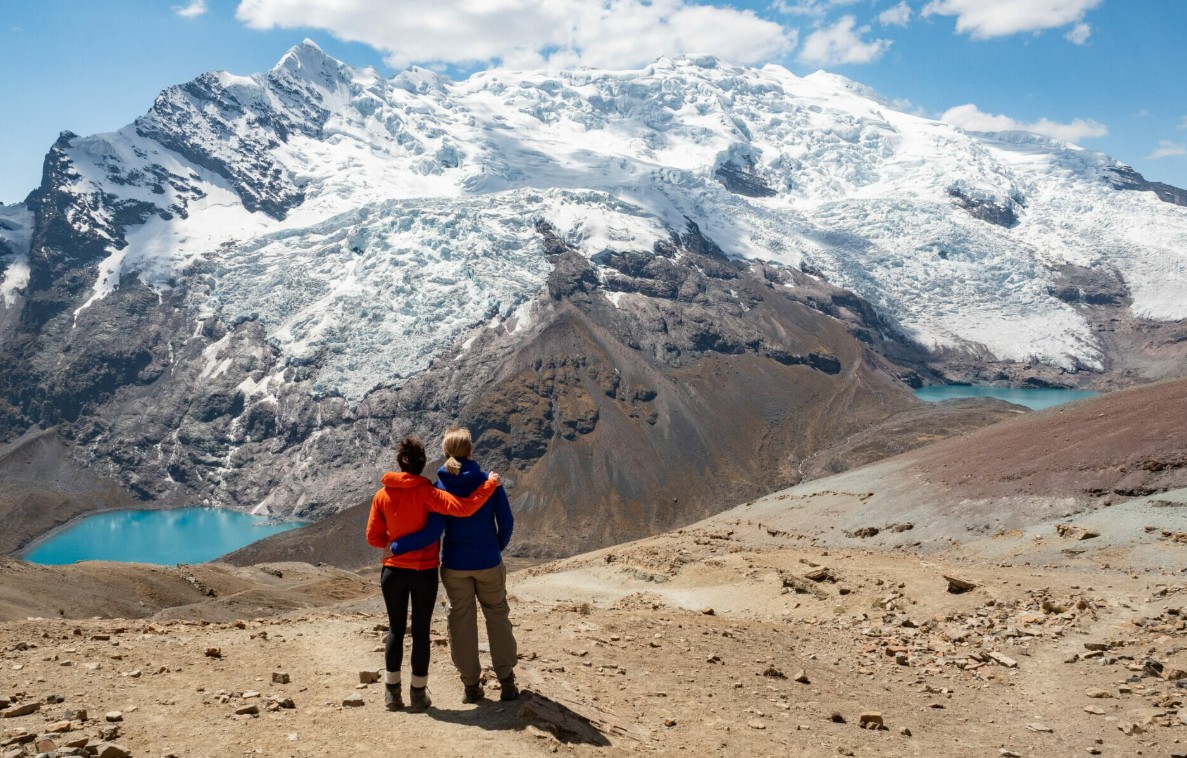
- Chile–Argentina crossings in Patagonia: jagged peaks, turquoise lakes, and long horizons.
- Peru’s southern routes: high plains, alpaca herds, and thin-air sunsets.
- Ecuador’s “avenue of volcanoes”: fertile valleys framed by snow-capped cones.
The Pan-American spine (and its famous gap)
The Pan-American Highway links much of the Americas by road, and parts of it run through spectacular landscapes in South America. Overlanders love tracing sections of it, but keep in mind that not every stretch is straightforward, and conditions can vary by season and region.
If you’re building a route along this north-south spine, plan longer travel days in mountain areas and shorter hops along flatter coastal zones. The reward is a sense of scale you don’t get when you fly over everything.
Boat rides and river travel
In Amazon regions, boats are sometimes the transport, not a tour add-on. Slow boats can take a day or more, but they’re often the most economical way to move between river towns. Bring snacks, water, and mosquito protection, and treat it like a mini-adventure rather than a commute.
Country-by-Country Reality Check
Transport quality isn’t uniform across the continent. Here’s a practical overview to help set expectations (and avoid planning mistakes).
The Southern Cone (Argentina, Chile, Uruguay)
Buses are generally reliable and comfortable, with strong long-distance networks. Distances are huge, so flights are useful for time-limited itineraries. Border crossings between Argentina and Chile can be slow in peak season, so build in buffers.
The Central Andes (Peru, Bolivia, northern Chile)
Buses are plentiful and cheap, but road quality varies. Altitude is the big factor—overnights can feel colder and more exhausting. Some iconic routes (like those heading toward salt flats or high lagoons) are best done with a mix of bus and guided transport.
Northern Andes and Caribbean coast (Colombia, Ecuador)
Buses connect almost everywhere, and flights are handy for coastal jumps or remote regions. In big cities, ride-hailing apps can make day-to-day navigation easier than negotiating taxis.
Brazil
Brazil’s size makes flying attractive for long distances. Buses cover the country, but routes can be very long. In major cities, metro systems and app-based rides are practical; in smaller towns, local buses and informal vans fill the gaps.
Local Transport in Cities: Metro, BRT, and Ride-Hailing
Once you arrive, the challenge becomes moving efficiently inside cities—often while carrying a backpack. Most major cities have some combination of metro lines, bus rapid transit (BRT), regular buses, and ride-hailing services.
- Metro: fast and predictable where available—great for airport-to-center connections in some cities.
- BRT: dedicated bus corridors that function like a metro on wheels; cheap and usually well marked.
- Local buses: inexpensive but can be confusing; use offline maps and ask your accommodation for the easiest lines.
- Ride-hailing: convenient at night, during rain, or when you’re short on time; confirm pick-up points in busy areas.
A simple rule: use public transport for predictable daytime movement, and ride-hailing for late nights, early airport runs, or when safety and simplicity matter more than saving a few dollars.
Border Crossings: What to Expect and How to Prepare
Crossing borders overland is part of the fun, but it can also be the most confusing day of your trip. Procedures vary, and sometimes you’ll have multiple checkpoints or a long gap between exit and entry posts.
- Carry your passport, a pen, and a digital and paper copy of key documents.
- Keep small cash in local currency for bus terminal fees, taxis, or unexpected charges.
- Start early: morning crossings usually have shorter lines than late afternoon.
- Ask the driver or station staff exactly where you’ll stamp out and stamp in; don’t assume the bus handles it for you.
- Be patient and polite—officials deal with thousands of travelers, and calm communication helps.
If your itinerary is tight (weddings, tours, or flights), consider flying for that segment. For flexible trips, overland crossings are a great way to see smaller towns and landscapes most travelers miss.
Safety and Comfort Tips for Overland Travel
South America is not “dangerous” by default, but transport environments are busy and sometimes chaotic—prime conditions for petty theft. Most issues are avoidable with simple habits.
- Keep valuables in a small daypack on your body, not in the overhead rack or luggage hold.
- Use a luggage lock or cable for backpacks on long rides, and keep your phone and wallet out of easy reach in crowded stations.
- Avoid flashing expensive gear at terminals; move with purpose and don’t linger outside late at night.
- If you arrive late, pre-plan your first ride to the accommodation (ride-hailing, official taxi stand, or pickup).
- Pack motion-sickness remedies if you’re sensitive; mountain roads can be winding for hours.
Sample Itineraries That Balance Cost and Time
To make the strategy concrete, here are sample “transport mixes” you can adapt. They’re designed to reduce long backtracking while still giving you classic overland experiences.
Two weeks: Andes highlights with smart flights
- Fly into Bogotá or Lima (whichever is cheaper), use buses for regional hops, then fly to your final country to avoid a multi-day return.
- Use a night bus once or twice for 8–12 hour segments when you can get a cama seat.
- Save daytime for scenic routes: highlands, lake regions, or canyon drives.
One month: North-to-south backbone
- Start in Colombia, travel overland through Ecuador and Peru with buses and short flights where needed.
- Add a flight to jump from central Andes to Patagonia if time is limited.
- Finish with scenic overland segments in Chile/Argentina where the landscapes are the point.
Slow travel: scenic segments as the main event
If you have time, build your route around the journeys you’ll remember. Favor daytime buses through mountain regions, choose boat travel in river areas, and plan rest days in hubs so you don’t string together too many exhausting transfers.
Booking Tools and Practical Money-Savers
A few habits can shave a surprising amount off your transport budget:
- Compare prices in local currency when possible; some sites show different totals depending on currency selection.
- Bundle comfort where it matters: spend extra on the longest rides, save on short hops.
- Use overnight travel selectively: it’s great when it replaces a hotel night, but don’t do it back-to-back for a week.
- Travel light: every extra bag increases friction and cost, especially on budget flights.
- Ask accommodations which terminal or company they trust; local advice often beats generic ratings.
Common Mistakes to Avoid
- Underestimating distances: two points that look close can be a full day apart by road.
- Stacking too many overnight rides: sleep debt ruins the trip faster than any budget problem.
- Overplanning every segment: leave room for weather, strikes, and spontaneous detours.
- Ignoring altitude: add a gentle acclimatization day before big hikes or long high-pass bus rides.
- Booking the cheapest option without checking departure time and station location.
How to Get Around South America: Picking the Right Mix
So, how to get around south america in a way that feels easy? Use buses as your default, flights as your time-saver, and scenic overland routes as your “experience upgrades.” When you plan in clusters, keep buffer days, and invest in comfort on the longest segments, the continent becomes far more navigable than it looks on a map.
If you want a simple starting template, try this: take buses within a region, fly between far-apart regions, and reserve at least a few daytime rides for the landscapes that make you stop staring at your phone and look out the window.
You Might Also Like: Flight From SFO to Puerto Vallarta
If you want a simple starting template, try this: take buses within a region, fly between far-apart regions, and reserve at least a few daytime rides for the landscapes that make you stop staring at your phone and look out the window—this is one of the easiest ways to remember how to get around south america confidently.