Planning an Amazon rainforest Peru with kids adventure can feel intimidating—heat, bugs, boats, and the unknown. But with the right base, the jungle becomes one of the most rewarding classrooms your children will ever step into. The Peruvian Amazon is surprisingly doable for families because many lodges run short, guided excursions, provide kid-sized life vests, and design flexible schedules that match real-world attention spans.
This guide walks you through a practical, parent-tested approach to building a kid-friendly jungle trip: where to go, when to go, what to book, and which nature activities actually work with children. You’ll also get safety-minded routines, packing checklists, and an easy itinerary framework you can adjust to your family’s ages, energy, and comfort level.
Why the Peruvian Amazon Works for Families
The jungle is wild, but your trip doesn’t have to be chaotic. Peru has established gateway towns, reliable domestic flights, and a strong eco-lodge scene. Many lodges hire naturalist guides who understand how to interpret wildlife in a way that clicks for kids—turning “a bird” into “a toucan that eats fruit like a salad bar.”
- Short, high-impact outings: Most excursions are 1–3 hours, perfect for younger travelers.
- Big “wow” factor: Monkeys, macaws, giant trees, and glowing eyes at night are instant memory-makers.
- Screen-free engagement: The rainforest is basically a living scavenger hunt.
- Comfort choices: You can choose anything from rustic camps to family suites with private bathrooms.

Pick the Right Amazon Region for Your Kids
“Peruvian Amazon” covers a massive area—so choosing the right base is the difference between an easy family trip and a logistical headache. Start by picking a gateway that matches your travel style, budget, and how much transit your children can handle.
Option 1: Iquitos (Northern Amazon, River & Flooded Forest)
Iquitos is a jungle city reachable by flight (there are no roads from Lima). From there, many lodges are accessed by boat on the Amazon and its tributaries. This region is great if your family loves the idea of river travel, sunsets on the water, and exploring flooded forest during higher-water months.
Option 2: Puerto Maldonado (Tambopata, Wildlife-Rich & Lodge-Friendly)
Puerto Maldonado is often the easiest starting point for families because transfers are straightforward and lodges commonly offer canopy walkways, clay licks, oxbow lakes, and comfortable room setups. If you want a classic “jungle lodge” feel with a good chance of spotting monkeys and colorful birds, Tambopata is a strong pick.
Option 3: Cusco + Manu Buffer Zone (Biodiversity, More Remote)
The Manu area is famous for biodiversity and dramatic landscapes. Some trips are more remote and longer, which can be better for older kids or families who are already confident travelers. If you’re considering this region, read about Manu National Park so you understand the protected-area context and why some routes require extra planning.
No matter which base you choose, remember that the broader Peruvian Amazonia includes many habitats—river edges, terra firme forest, oxbow lakes, and seasonally flooded areas. Variety is good for kids because the scenery changes often, and each habitat has different animals to look for.
Choose the Best Trip Length for Your Family
For most families, a 4–6 night Amazon stay is the sweet spot. Shorter than that can feel rushed after transfers. Much longer can be amazing, but you’ll want a lodge with plenty of activity variety and downtime spaces (hammocks, reading corners, a dock, or a small pool).
- 2–3 nights: Works as an add-on, but plan fewer locations and accept that you’ll miss some highlights.
- 4–6 nights: Best for first-timers—enough time for multiple habitats and repeat wildlife chances.
- 7+ nights: Great for older kids who love nature journaling, photography, and longer walks.
When to Go: Weather, Water Levels, and Comfort
The Amazon is warm and humid year-round, but seasons change what you do. In drier months, trails are easier and you’ll often walk more. In wetter months, water levels rise, boat access increases, and the forest can feel extra lush. For a first trip with children, prioritize comfort and predictability: fewer mud battles, fewer soaked shoes, more relaxed parents.
Family-friendly timing tips
- For easier walking: Aim for the relatively drier period, often around May through October in many parts of the Peruvian Amazon.
- For more boat exploration: Higher water can open up channels and flooded forest routes, often during wetter months.
- For fewer crowds: Consider shoulder dates around the edges of peak holiday seasons.
Whatever month you choose, pack for rain. In the jungle, “dry” usually means “less wet,” and kids will have more fun when you’re ready for surprise showers.
How to Choose a Truly Kid-Friendly Lodge
Many lodges say “family-friendly,” but you want specifics. Before booking, ask clear questions that reveal whether they genuinely support children or simply allow them.
Non-negotiables for families
- Safe room setup: Intact screens or mosquito nets, solid railings, and clear rules about balconies.
- Kid-size life jackets: For boat transfers and lake outings.
- Flexible meal options: Simple foods, early dinner availability, and allergy awareness.
- Guide-to-guest ratio: Smaller groups help kids stay engaged and safe.
- Quiet hours and downtime: Hammocks, a lounge, or a shaded deck for breaks.
Nice-to-haves that parents love
- Family rooms or connecting cabins so everyone sleeps better.
- Filtered water stations so you’re not constantly opening plastic bottles.
- Boot lending to simplify packing.
- Power availability for charging headlamps and cameras (even if you’re limiting screens).
Set Expectations by Age: What Kids Can Realistically Do
“Kid-friendly” looks different at 4, 8, and 14. You’ll have a better trip if you plan around attention span, walking stamina, and comfort with nighttime sounds.
Ages 3–6: Keep it short, sensory, and playful
- Choose 1–2 hour outings with frequent stops.
- Prioritize boat rides, butterfly gardens, and easy boardwalk trails.
- Make the rainforest a game: “Find three shades of green” or “Spot a leaf bigger than your head.”
Ages 7–11: The prime wildlife-spotting years
- Kids can handle 2–3 hour walks if pace is slow and there are snacks.
- They love simple field skills: using binoculars, reading tracks, listening for howler monkeys.
- Night walks can be magical if you frame them as “flashlight safari.”
Ages 12+: Go deeper (and give them a mission)
- Longer hikes, early departures, and photography become more appealing.
- Encourage a project: a species list, short videos, or a mini travel diary.
- Talk ethics: why distance matters for wildlife and why feeding animals is harmful.
Family-Friendly Nature Activities You Can Plan Around
Below are activities that work well with children in the Amazon. Think of them as a menu: you don’t need all of them, but a good trip includes a mix of movement, quiet observation, and “wow” moments.
1) Guided wildlife walks with a kid pace
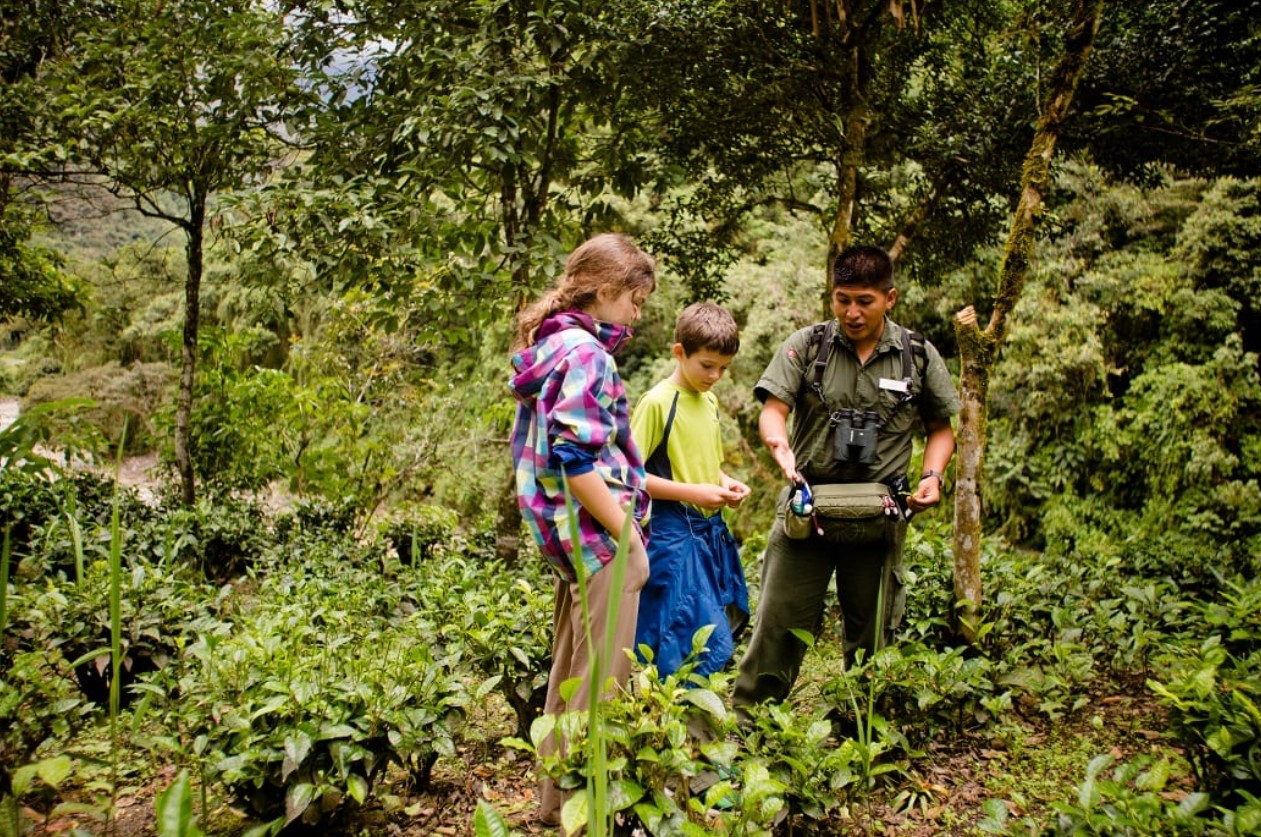
Short walks on well-maintained trails are perfect for teaching kids to notice details: leaf-cutter ants carrying green flags, vines that look like jungle ropes, or the sound map of birds in the canopy. A guide who knows how to translate science into stories is the secret ingredient.
2) Canoe or small-boat exploration on oxbow lakes
Calm-water paddles are ideal for families because you can drift quietly and let wildlife come to you. Kids often spot turtles, hoatzins, and monkeys before adults do—especially when you give them binoculars and a simple checklist.
3) Canopy walkway or hanging bridges
Seeing the rainforest from above changes everything. Canopy walkways let kids understand layers—forest floor, understory, and canopy—without requiring a long trek. If your child is nervous about heights, go early in the trip when energy is high and keep it optional.
4) Clay lick or parrot viewing (when available)
In some regions, macaws and parrots gather at clay licks. It’s a classic Amazon highlight because it’s colorful, loud, and easy to appreciate even for kids who get bored on slow hikes. Your guide will choose the best time based on wildlife patterns and weather.
5) Night walk: “eyes in the dark” safari
Nighttime is when the rainforest feels most alive. With headlamps, your family can look for spiders, frogs, and reflective animal eyes. Keep it short, stay on established paths, and let kids opt out if they’re tired. The goal is curiosity, not endurance.
6) River dolphin search (region-dependent)
In some areas of the Amazon basin, you may have a chance to look for river dolphins. Treat it as a bonus rather than a guarantee, and keep the focus on the overall experience—boat time, river landscapes, and birdwatching.
7) Indigenous or local community visit (done respectfully)
Community visits can be meaningful when they’re invited, small-scale, and clearly benefits local people. Look for experiences that emphasize cultural exchange, crafts, and daily life—not staged “performances.” Prep kids to ask respectful questions and to follow photo rules.
8) Junior naturalist challenges
Many guides will happily tailor activities for kids if you ask. Ideas include:
- Leaf and seed treasure hunt (no picking live plants; collect fallen items).
- “Sound bingo” (howler monkey, cicadas, frogs, rain on leaves).
- Track detective (prints, scat, scratch marks, feeding signs).
- Rainforest journaling with sketches instead of perfect spelling.
Safety and Comfort: The Simple Systems That Make the Trip Easy
Safety in the Amazon is mostly about routines. When kids know the rules, they relax. When parents have a plan, they stop worrying and start enjoying the rainforest.
Golden rules for families in the jungle
- Hydrate early and often: Start each outing with water and a bathroom stop.
- Closed-toe shoes only: Even at the lodge, unless you’re in a designated safe area.
- “Buddy system”: Kids don’t wander, even for a “quick look.”
- Hands off wildlife: No touching frogs, insects, or unknown plants.
- Use repellent and long sleeves strategically: Especially at dawn and dusk.
Health prep without panic
Before you travel, check what vaccines or medications are recommended for your exact route and your child’s age, and talk with a qualified travel health professional. Risk levels vary by region and season, and the best advice is personal and up to date. Also pack a small family health kit: rehydration salts, bandages, antiseptic wipes, antihistamine (if appropriate for your family), and any prescription meds in original packaging.
How to Structure Each Day (So Kids Don’t Melt Down)
Most lodges follow a rhythm that works well for wildlife and families: early activity, rest during the hottest hours, then a late-afternoon outing. The trick is treating downtime as part of the plan, not a failure.
- Early morning: Short walk or boat ride when animals are active.
- Late morning: Breakfast + free time (hammocks, drawing, reading).
- Midday: Lunch + nap/quiet time. Even older kids benefit from a reset.
- Afternoon: Lake paddle, canopy walk, or cultural activity.
- Evening: Dinner + optional night walk or storytelling session.
Amazon rainforest Peru with kids: A Simple 5-Day Itinerary
Use this as a template and swap activities based on your lodge’s offerings and your kids’ energy. This sample works well for an Amazon rainforest Peru with kids plan because it balances excitement, learning, and rest.
Day 1: Arrival + “Jungle 101”
- Transfer to lodge and settle in.
- Orientation: boundaries, safety rules, and how to use binoculars.
- Sunset boat ride or short trail walk close to the lodge.
Day 2: Canopy + easy wildlife walk
- Morning canopy walkway or hanging bridges.
- Guide-led walk focused on insects, plants, and animal signs.
- Afternoon downtime with journaling or drawing.
Day 3: Oxbow lake + “quiet wildlife” skills
- Early lake canoe or paddle excursion.
- Practice silent observation: whisper rules, slow movements, spotting games.
- Optional night walk if kids are still energetic.
Day 4: Big highlight day (clay lick or special excursion)
- Pre-dawn departure if a clay lick is part of your program.
- Midday recovery: naps, board games, and a relaxed lunch.
- Late-afternoon river exploration for birds and sunset.
Day 5: Wrap-up + kid-led exploration
- Short morning outing chosen by the kids: boat, short walk, or birdwatching from the dock.
- Pack and transfer back to town.
- Celebrate with a “species awards” ceremony: funniest bird, loudest animal, coolest bug.
What to Pack for a Jungle Trip With Children
Packing well is half the battle. You don’t need expensive gear, but you do want the right categories: sun/rain protection, bite protection, and comfort items that prevent meltdowns.
Clothing essentials
- 2–3 lightweight long-sleeve shirts (breathable)
- 2 pairs long pants (quick-dry)
- 1 rain jacket or poncho per person
- Wide-brim hat
- Extra socks (more than you think)
- Sleepwear that’s comfortable under a mosquito net
Footwear
- Closed-toe shoes with grip
- Light sandals for inside your room (if lodge rules allow)
- Optional: rubber boots (some lodges lend these)
Family gear that pays off
- Headlamps (one per adult, optional for older kids)
- Small dry bags for phones/cameras
- Binoculars (even a basic pair makes kids instantly engaged)
- Refillable water bottle
- Snacks your kids reliably eat
- Lightweight notebook + pencils for a jungle journal
Food, Allergies, and Picky Eaters
Most lodges serve buffet-style meals with local staples—rice, plantains, soups, fish or chicken, fruit, and tea. If your child is picky, bring a few familiar snacks and ask the lodge in advance about simple options (plain pasta, eggs, oatmeal). For allergies, communicate clearly before arrival and again at check-in.
How to Keep Kids Engaged Without Over-Scheduling
The rainforest rewards patience, but kids need structure. A few simple strategies can turn “Are we done?” into “Can we go again?”
- Give them a role: “You’re the bird spotter,” “You’re the sound recorder,” or “You’re in charge of the checklist.”
- Use micro-goals: “Let’s walk until we find a leaf-cutter ant trail.”
- Celebrate small finds: A tiny frog can be more exciting than a distant monkey.
- Build recovery time: Plan a quiet hour after every big activity.
Budgeting: What Families Often Forget to Include
Beyond flights and lodging, family budgets can get surprised by transfers, tips, gear purchases, and extra snacks in gateway towns. Build a cushion for the “small stuff” so you don’t feel stressed on the ground.
- Private transfers (sometimes worth it with kids)
- Extra luggage fees for boots/gear
- Guide and staff tips (ask your lodge for norms)
- Travel insurance that covers remote locations
- One “comfort splurge” (a better room, private outing, or extra night)
Responsible Travel Lessons Kids Actually Remember
One of the best parts of traveling with children is how naturally they connect with conservation—if you give them language and examples. Talk about staying on trails, not feeding animals, and why quiet observation matters. Encourage them to ask how the lodge supports local communities, reduces plastic, and protects wildlife habitat.
You Might Also Like: South Aamerica travel guide for first timers routes costs and safety basics
Common Parent Worries (and the Calm Fixes)
“What if my child is scared at night?”
Bring a small night light, keep bedtime consistent, and do one “sound story” together: name three sounds you hear and imagine what animal makes them. Familiarity turns fear into curiosity.
“What if we don’t see much wildlife?”
Wildlife is never guaranteed, and that’s part of the lesson. Focus on the process: learning tracks, listening for calls, watching insects. If you treat every walk like a discovery, kids won’t measure the trip by one animal.
“What if the bugs are too much?”
Use long sleeves at peak mosquito times, choose a lodge with good screens/nets, and keep repellent routines consistent. Also: normalize it. Bugs are part of the ecosystem, and kids adapt fast when adults stay calm.
Before You Go: A Quick Family Checklist
- Choose gateway (Iquitos, Puerto Maldonado/Tambopata, or Manu area)
- Book a lodge with clear family features (life vests, flexible meals, small groups)
- Confirm health guidance for your route with a professional
- Pack rain + bite protection systems (not just items)
- Prepare kid roles (journal, checklist, binoculars, sound bingo)
- Plan downtime as a non-negotiable
You Might Also Like: South America Travel Safety Tips for Every Traveler
With smart choices and simple routines, the jungle becomes comfortable, exciting, and deeply educational. The best part is watching your children’s confidence grow: they learn to move slowly, look closely, and respect what they can’t control. If you’re dreaming about an Amazon rainforest Peru with kids adventure, start small, choose the right lodge, and let the rainforest do what it does best—spark wonder in every generation.